Radiators: replaced, added and moved
Ian replaces tired radiators like for like, adds one to a cold room, moves one for a new kitchen or bathroom layout, and fits thermostatic valves so each room can be set on its own. He also balances the system so every radiator gets its share.
Prices are given on the phone, or after Ian has seen the job. Have your postcode ready.
Registrations
- Gas Safe
- 6061489
- OFTEC
- 11834
- Hours
- 7 days
- Base
- WV6
One room always cold?
Before buying a bigger radiator, ring. It is often the valve, the balancing or the pipe run, and those are cheaper to fix.
What people ring about
- Cold at the topAir. Bleed it. If it keeps coming back, something is letting air in or the system is corroding.
- Cold at the bottomSludge. Bleeding won't help. The system water needs testing and possibly a power flush.
- Cold all over while the others are hotA stuck thermostatic valve pin, a closed lockshield, or the system needs balancing.
- Leaking valve or jointRadiator valves weep as they age. Replacing the valve is a quick job; a leaking radiator body means a new radiator.
- A new or bigger oneFor a cold room, an extension or a room where the radiator was undersized when it was fitted. Ian sizes it to the room.
- Towel railsHeated towel rails in bathrooms, plumbed into the heating or fitted with an electric element for summer.
Replacing a radiator
Measure
Ian checks the pipe centres and the wall so the new radiator goes on the existing pipework wherever possible.
Drain down
On a sealed system, the boiler is depressurised; on an open one, the system is partly drained.
Fit
The old radiator off, the new one on, with new valves if the old ones are tired.
Refill and bleed
The system is refilled, dosed with inhibitor, bled and rebalanced so the new radiator doesn't starve the others.
Thermostatic valves and balancing
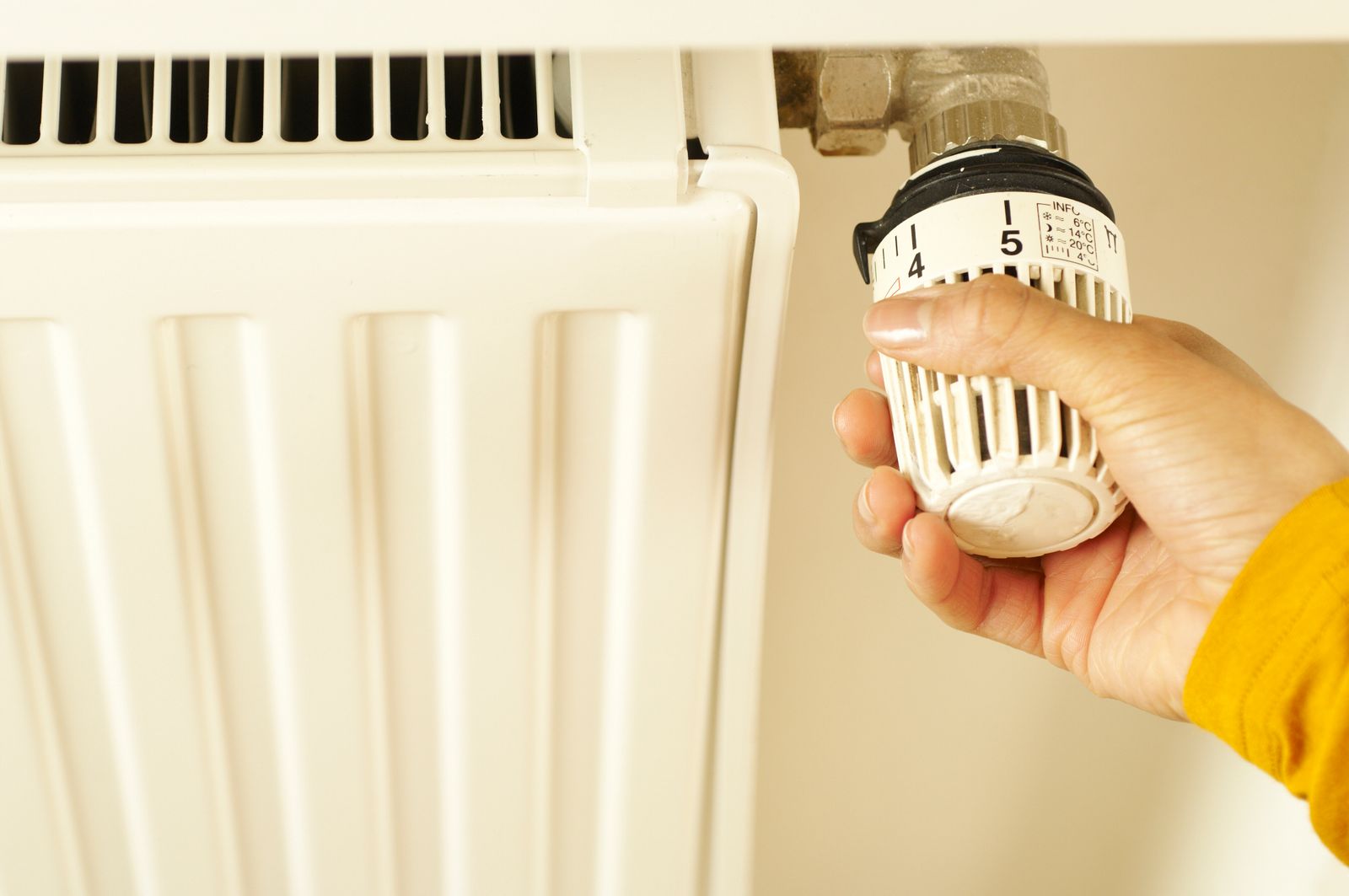
A thermostatic radiator valve lets a room be set to its own temperature, so bedrooms can run cooler than the living room. Fitting them to every radiator except the one in the room with the wall thermostat is a cheap way to cut the gas bill.
Balancing means adjusting the lockshield valve on each radiator so the water is shared out evenly. It is the reason the radiator furthest from the boiler is often the coldest, and it costs nothing to put right.
Ian is extremely efficient and knowledgeable. I cannot recommend him enough
David Joynson, Google review
Before you ring
One radiator is cold. Do I need a new one?
Usually not. Cold at the top means air, which bleeding fixes. Cold at the bottom means sludge. Cold all over while the others are hot usually means the valve is stuck or the system needs balancing. A radiator only needs replacing when it leaks or is rusted through. Radiators.
Do I need a power flush?
Only if the system water shows it. Radiators cold at the bottom, black water when you bleed them, or a boiler that keeps overheating are the usual signs. Ian tests the water first and recommends a flush only when the sludge is there. Power flushing.
What's the difference between a heating engineer and a plumber?
A heating engineer installs, repairs and services boilers and central heating. A plumber works on water supply, drainage, taps, toilets and bathrooms. Ian does both, but by law only a Gas Safe registered engineer can work on a gas boiler. Plumbing has its own page.
How do I pay?
By bank transfer. Repairs, services and certificates are paid when the job is done. Bigger jobs, like a new boiler, a bathroom or air conditioning, are 50% on booking to cover the materials, and the balance on completion.